A Crafted Review: The Real Best Carpenter in This Town
Let’s talk about this design from a stitcher’s perspective. When I look at The Real Best Carpenter in This Town, I’m not just seeing a graphic file. I’m imagining it translated into thread on fabric. This is the crucial step for anyone in our field—the leap from digital asset to a real, tactile embroidery project. Whether you’re preparing a custom gift for a woodworker friend or considering it for your craft business lineup, the practical execution matters most.
The First Impression: A Statement of Quiet Confidence
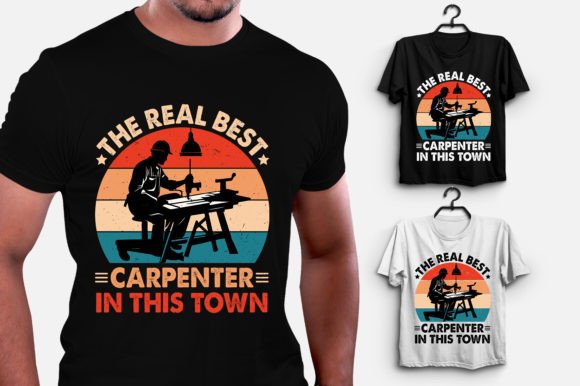
The mood here is solid, a bit playful, but fundamentally proud. It’s not shouting; it’s stating. That’s a great starting point for embroidery design. The layout is bold and central, which means it will naturally command attention on a garment or bag. The level of detail appears clean, without overly tiny elements that could become muddled in satin stitch. This visual personality feels like it belongs on something sturdy—a canvas tote, a heavyweight custom apparel sweatshirt, or a thick cotton apron. It has a workshop-ready vibe.
Where This Design Finds Its Natural Home
In my mind, I’m already placing it on different surfaces. For a personalized gift, imagine this embroidered neatly on the corner of a soft flannel blanket for a new homeowner, or centered on a durable tote bag filled with tools. As a small shop product, it could be a standout on a unisex cap or a simple, well-made pillow cover for a den or man-cave. The theme lends itself perfectly to holiday embroidery for the practical, hands-on person—far more meaningful than a generic greeting.
Thinking commercially, an Etsy seller or apparel decorator could use this as a core design for a niche line. It’s recognizable and speaks directly to a community. On a baby embroidery item? Perhaps a clever, mini version on a baby’s chore coat for a carpenter dad—that’s a delightful, sentimental touch. The key is matching the design’s inherent weight to a product that feels equally substantive.
Scenarios Where You Might Want to Pause
Not every project is a perfect fit. The bold, declarative nature of The Real Best Carpenter in This Town means it might feel overwhelming on very small items like a baby’s tiny tee or a delicate handkerchief. Similarly, on highly textured fabrics like a loose knit sweater, the clarity of the lettering could get lost unless you use a very firm stabilizer.
I’d be cautious with very thin or stretchy fabrics if the design has areas of high stitch density. You’d need to ensure the fabric can support the stitches without puckering. Embroidering on curved surfaces like the front of a cap requires careful placement so the statement remains centered and readable. Always, always test the design on scrap fabric first, especially if working with a dark background where thread color contrast is critical.
The Stitched Outcome: Visual Appeal and Value
When this design is well-executed, it elevates the finished product. Clean embroidery of a clear statement adds perceived value—it feels intentional and professional. For a customer, it builds trust; they see a cohesive, well-made handmade product. This directly impacts buyer engagement in a marketplace. It’s not a vague graphic; it’s a badge of identity. That makes it highly giftable and excellent for brand consistency if, say, a small carpentry business wants branded merch for their team.
From a purely visual standpoint, the design’s simplicity is its strength for stitching. There are no intricate, hairline details that would require microscopic precision. This means good stitching clarity on most fabrics, leading to a crisp final look that photographs well for your digital product previews and printable mockups.
Practical Notes From the Hoop
Before you commit this to a client’s hoodie or a batch of embroidered patches, run through these checks. Confirm your hoop size can accommodate the design comfortably—you don’t want to cramp it. Inspect the provided files, likely the SVG and EPS vector file, in your software to check the paths. Are the corners clean for smooth fill stitch areas?
Do a test in both black and white thread on neutral scraps to see how it reads. Compare how it might look on light and dark fabric backgrounds; you may need to adjust thread colors for optimal pop. Remember, a design like this, offered as a digital embroidery file, is often intended for both personal and commercial embroidery projects, but you must confirm licensing before selling finished items. It’s a fundamental step for creative entrepreneurs.
Finally, consider the end use. If the product will need frequent washing—like a kitchen towel or work apron—ensure your stitch choices and stabilizers are durable enough to maintain that clean, confident statement over time. The real test of a good machine embroidery design isn’t just in the first stitch, but in how it wears.
A Real-Life Scenario: The Custom Workshop Tote
Let’s walk through a typical application. Imagine a customer orders a custom tote for their father’s carpentry workshop. They want The Real Best Carpenter in This Town on the front pocket. You select a sturdy, natural canvas. You choose a deep navy thread for contrast against the light fabric. After testing on a scrap piece of the same canvas, you note the fabric texture is coarse, so you opt for a slightly higher stitch density in the fill areas to ensure solid coverage. You use a sturdy cut-away stabilizer.
The final result is a tote that looks professionally made, feels robust, and carries the message with quiet authority. The customer’s reaction isn’t just about the bag; it’s about the perfect execution of a sentiment. That’s where this design, from the T-Shirt Designs and Graphics category, truly proves its worth—when it moves from a file on your screen to a cherished, useful, and beautifully stitched object.
In essence, The Real Best Carpenter in This Town is a design that asks for a thoughtful maker. It’s straightforward, but its impact depends entirely on your skill and consideration in applying it. It rewards good embroidery practice with a finished product that feels authentic, valuable, and perfectly suited to its purpose.