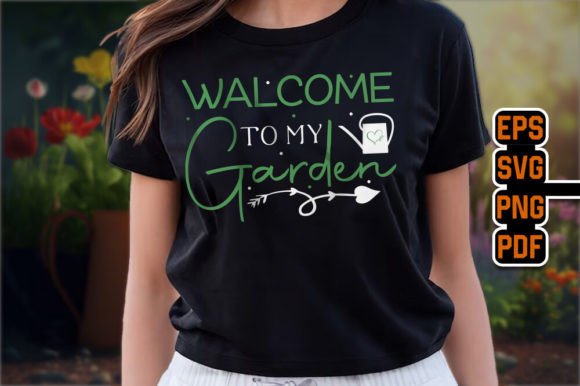
A Garden Welcome Embroidery Design for Crafters & Makers
A First Impression of Fresh, Friendly Charm
Opening the Welcome to My Garden Typography T-Shirt design file, my immediate thought was “this is cheerful.” The layout isn’t overly complicated—it’s a clean, welcoming phrase arranged in a way that feels organic, like a sign at a garden gate. The typography itself has a gentle, flowing personality, avoiding harsh angles. For an embroidery designer, this suggests a mood that’s perfect for personalized gifts and cozy, handmade products. It doesn’t scream; it invites.
The Natural Habitat for This Garden Quote Design
In practical terms, where does this design naturally belong? I picture it stitched onto a canvas tote bag for a gardening friend, or centered on a soft cotton apron. Its friendly vibe makes it a strong candidate for baby items, like a lightweight sweatshirt or a nursery pillow cover, where the text conveys a warm, safe feeling. For a small business owner, this embroidery design could easily become a core product line for spring and summer—think embroidered tea towels, cozy blanket corners, or simple cap designs for a boutique.
The 4500×540 PNG file means it’s a sizable, print-ready graphic asset. This high resolution is crucial for us as makers. It allows for scaling without losing detail, which is essential when adapting the design for different hoop sizes and final products, from a large pillow to a small patch.
Where the Design Shines in Real Projects
Let’s walk through a real scenario. A client requests a custom embroidered gift for a wedding present—a set of kitchen towels for a couple who loves their backyard garden. The Welcome to My Garden design comes to mind instantly. On a neutral linen towel, using a soft green thread palette, this design wouldn’t just be decoration; it would tell a story and feel deeply personal. On a sweatshirt, it becomes a statement of hobby and pride, likely to engage a buyer looking for something unique rather than mass-produced.
For an Etsy seller creating digital products, this graphic serves as a superb base for printable mockups or as part of a digital collage. Its clarity at high resolution helps build customer trust in the product previews, making the finished product look professional and thoughtfully designed.
Navigating the Practical Stitching Terrain
While the design is charming, its application requires some practical judgment. The detail level, given the typography, means very small lettering could become a challenge. On textured fabrics like some sweaters, or on dark fabric where thread contrast is paramount, you’ll need to plan carefully. Stitch density in the filled areas (if interpreting the graphic as a potential applique or satin stitch design) must be considered to avoid puckering on lightweight t-shirts or stretchy fabrics.
Embroidering on curved surfaces like caps demands extra attention to the design’s layout to ensure it sits correctly. And for products destined for frequent washing—baby clothes or kitchen linens—a robust stitch construction and proper stabilizer choice are non-negotiable to maintain that handmade presentation over time.
Spots to Approach with Care
I would use this design cautiously in very small hoop sizes. Tiny details might lose their clarity and become a blur of threads. Similarly, on highly layered garments or fabrics with a lot of stretch, the larger, solid areas implied by the typography’s weight could present stability issues without the right stabilizer. Always test on scrap fabric first. This step is not just a suggestion; it’s a rule. It allows you to check thread color contrast, review how the design’s scale feels on the actual product, and inspect any small, intricate corners before committing to the final project.
Lifting Your Product’s Value and Appeal
From a business perspective, a well-executed embroidery of Welcome to My Garden Typography T-Shirt elevates a simple item. A plain tote bag becomes a specialty gardening tote. A basic hoodie transforms into a branded merchandise piece for a small plant shop. The design’s inherent giftability and recognition factor—the phrase is universally warm—can increase buyer engagement in your craft fair booth or online shop listings. It supports brand consistency if you, as a creative entrepreneur, focus on nature-themed or home-centric products.
Essential Designer Notes Before You Stitch
Before you run this embroidery file, do a few checks. First, confirm your intended hoop size can accommodate the design with the detail level you want. Play with the scale digitally. Second, test the design in both black and white mockups to see how it performs conceptually on light and dark fabric backgrounds—this informs your thread choices. Third, and critically, understand the licensing. The product description states it’s for T-Shirt, Banner, Poster, etc., but for commercial embroidery projects where you’re selling the finished stitched item, you must verify that the license permits this. Never assume.
For machine embroidery, if you are converting this PNG into an embroidery file, pay close attention to stitch type allocation. Satin stitches for the lettering might be elegant, but fill stitches for larger areas could add a lovely texture. Remember, fabric texture interacts with stitch choice; a smooth cotton accepts detail differently than a nappy towel.
Final Thoughts for the Hands-On Maker
The Welcome to My Garden Typography T-Shirt design is a versatile graphic asset with a heartwarming core. Its real value is unlocked when you match it thoughtfully to the right project—a personalized gift, a boutique’s spring merchandise, a cozy home decor item. It’s not a design for every surface, but for the ones it fits, it adds a layer of friendly, handmade charm that customers and gift recipients genuinely appreciate. Approach it with a practical eye, test it thoroughly, and it will likely become a reliable, appealing part of your embroidery project repertoire or product line.