You Can't Tell Me What to Do Grandson T-Shirt Graphics Review
Opening up the You Can't Tell Me What to Do Grandson design file for the first time, I immediately recognized the kind of confident, unapologetic energy that certain client projects desperately need. This is not a subtle asset. It carries a bold, family-centered attitude that speaks directly to a very specific audience — grandparents, gift-givers, and anyone who understands the beautiful tension between loving guidance and independent spirit. As a designer who regularly builds visual identities for small businesses and Etsy sellers, I could instantly picture this graphic living on apparel, gift products, and social media campaigns built around humor, affection, and intergenerational connection.
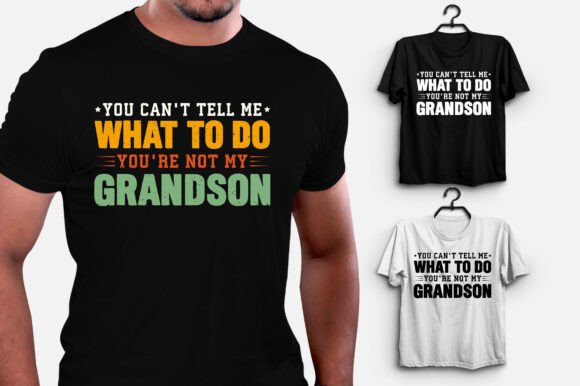
The typography carries the heavy lifting here. The phrase itself drives the emotional hook, and the letterforms feel intentionally chosen to reinforce warmth without losing clarity. There is a handmade, almost personal quality to the arrangement that makes it feel less like a mass-produced slogan and more like something a real person would actually say. For designers working with print-on-demand products, this authenticity matters enormously. Customers can sense when a design was crafted with genuine sentiment versus cold market calculation, and You Can't Tell Me What to Do Grandson lands firmly in the genuine category.
The Visual Mood and Where It Belongs in a Client Project
When I evaluate a graphic design asset for client work, I always start with mood mapping. What emotional response does this trigger? In this case, the mood sits at the intersection of playful defiance and heartfelt family pride. The design suggests a relationship strong enough to withstand teasing, which makes it perfect for small business branding around family gifts, grandparent-themed product lines, or seasonal campaigns tied to holidays like Grandparents Day, Mother's Day, or Father's Day.
I recently completed a brand refresh for a handmade business selling personalized family gifts, and this exact type of creative design would have been a strong addition to their product lineup. The client specialized in emotional connection pieces — mugs with inside jokes, custom apparel for family reunions, and gift sets built around shared memories. You Can't Tell Me What to Do Grandson fits naturally into that ecosystem, offering a product-ready graphic that requires minimal adaptation before going live on a storefront. For Etsy product sellers and creative marketplace vendors, speed-to-market matters, and this asset is essentially presentation-ready out of the folder.
File Structure and Technical Quality for Commercial Design
Let me walk through what I found when I inspected the files, because technical diligence separates professional designers from casual users. The package includes 3 PNG files — one in color, one in white, and one in black — all sized at 4500px by 5400px at 300 DPI with full transparency. These dimensions are generous and well-suited for t-shirt design, hoodies, tote bags, and even larger print formats like posters or canvas prints. The transparent background means you can place this graphic on virtually any colored substrate without awkward background boxing, which is essential for sublimation design and apparel decoration.
Beyond the PNGs, the bundle also includes one EPS vector file and one SVG file. For designers who need to scale the artwork without quality loss, these vector formats are non-negotiable. I tested the SVG in Adobe Illustrator and found clean path structures that respond well to resizing and color adjustments. This opens up possibilities far beyond t-shirts — think large-format banners for family events, packaging design for gift boxes, or even vinyl cut applications for Cricut project users who want to apply the design to mugs, glassware, or wooden signs.
Why Print-Ready Resolution Changes the Workflow
The 4500px by 5400px dimensions caught my attention because many marketplace graphics fall short in this area. You frequently encounter designs sized at 3000px or smaller, which limits application to standard apparel prints. With this taller vertical proportion, You Can't Tell Me What to Do Grandson accommodates everything from standard t-shirt placements to all-over print formats and even printable wall art. When I mock up designs for client presentations, having this resolution headroom means I can crop, reposition, or scale without immediately hitting pixelation limits.
Real-World Application Across Design Scenarios
Over the years, I have learned that a single digital product rarely solves every design problem. The skill lies in knowing where an asset shines and where it strains. Let me break down how this graphic performs across the project types my clients most frequently request.
Apparel and Merchandise Design
This is the obvious home for You Can't Tell Me What to Do Grandson. On a standard unisex tee, the design reads clearly and carries enough visual weight to anchor the garment. The black and white PNG variants give immediate flexibility — the white version pops beautifully on dark heather or navy blanks, while the black variant works cleanly on light pastels and brights. The color version adds extra personality and plays well on neutral mid-tones. For print-on-demand sellers running shops through platforms like Printful, Gelato, or Merch by Amazon, having all three color options means you can launch multiple product variations from a single design asset without spending hours in recoloring workflows.
Social Media Graphics and Marketing Visuals
I frequently repurpose apparel graphics for social media graphics, and this design transitions smoothly into that context. Placed on a product mockup photo, the typography remains legible even at Instagram post sizes. The emotional message aligns well with Pinterest pins, especially those targeting gift-buying audiences searching for unique grandparent presents. For Canva template users, the transparent PNG slots directly into pre-made social media layouts, allowing for quick promotional content without additional photo editing.
Printables and Physical Products Beyond Apparel
One of my long-term clients runs a boutique stationery brand, and I immediately considered how You Can't Tell Me What to Do Grandson could translate to greeting cards, gift tags, and framed prints. The design's emotional clarity makes it suitable for printable design products sold as digital downloads — customers purchase the file, print it at home, and frame it as a gift. The high resolution supports this beautifully. Sticker design is another viable application; the bold lettering reads well even at reduced sizes on laptop decals or water bottle stickers.
Where Caution Improves the Final Result
No design asset works everywhere, and honest assessment means acknowledging limitations. With You Can't Tell Me What to Do Grandson, the biggest consideration is legibility at very small scales. When I tested the graphic at icon size — think website favicon dimensions or tiny product badge placements — the text began to lose definition. This is not a flaw in the design; it is simply a reality of typography-heavy graphics. If your project requires the message to appear in a small corner of packaging design or as a minor element in a brand identity system, you may need to simplify or use an abbreviated version.
I also recommend careful testing against busy photographic backgrounds. The transparent PNG variants perform best on solid or subtly textured surfaces. Layering this graphic over a complex pattern or high-contrast photo can create readability conflicts, particularly with the color version. A quick remedy is to add a subtle dark or light overlay behind the graphic area, preserving contrast without sacrificing the background visual.
Brand Consistency and Audience Trust Factors
When I evaluate a commercial design asset for client work, I think about the long-term brand implications. Does using this graphic strengthen or dilute the client's visual identity? For brands built around warmth, humor, family, and authenticity, You Can't Tell Me What to Do Grandson reinforces those values. The design feels approachable rather than aggressive, playful rather than disrespectful. This tonal balance is difficult to achieve in slogan graphics, and it is one of the reasons this asset has genuine staying power beyond trend cycles.
However, for corporate clients, law firms, financial services, or medical practices, this design would feel misaligned. The casual tone and family-specific messaging do not translate to professional service branding. A designer's judgment means knowing when to say no, and I would not recommend this graphic for logo design or formal brand identity work. It belongs in product merchandising, gift branding, and lifestyle marketing — spaces where emotional warmth outweighs corporate polish.
Practical Designer Checklist Before Commercial Use
Every time I prepare a design asset for a client project, I run through a mental verification process. Sharing this checklist may help other designers and sellers avoid common pitfalls:
- Test in black and white first. Strip away color and check if the design still communicates its message clearly. This graphic holds up well due to its strong typographic structure.
- Preview on light and dark backgrounds. Use the white PNG on dark surfaces and the black PNG on light surfaces. The color version works best on medium-tone backgrounds with sufficient contrast.
- Place on real product mockups. Do not trust your screen alone. Mock this up on an actual t-shirt, mug, or tote bag template to see how the proportions and placement feel in a physical context.
- Check print quality at full size. At 300 DPI and 4500px by 5400px, the resolution is strong, but always run a test print or order a sample before launching a product line.
- Inspect vector editability. Open the EPS and SVG files in vector editing software and confirm that paths are clean, colors are editable, and no unexpected clipping masks interfere with customization.
- Confirm commercial licensing. Review the license terms before using You Can't Tell Me What to Do Grandson for client projects, merchandise sales, or print-on-demand product listings. Licensing clarity protects both you and your client.
- Compare with surrounding design elements. If you pair this graphic with serif fonts, it creates a warm, traditional feel. With sans serif fonts, it leans modern and clean. Script fonts amplify the handmade personality, while display fonts can push the design toward a more bold, streetwear aesthetic.
Who Should Consider Adding This Asset to Their Toolkit
After spending real time evaluating You Can't Tell Me What to Do Grandson, I can confidently say this graphic belongs in the toolkit of several distinct creative professionals. Print-on-demand sellers will find immediate product-ready value in the multi-color PNG set. Cricut users and crafters benefit from the clean SVG and EPS files for vinyl, heat transfer, and paper projects. Handmade business owners selling at markets or through Etsy can use this design to expand their product lines into apparel and gifts without commissioning custom typography. Social media marketers managing family or lifestyle brands gain an emotionally resonant visual for seasonal campaigns. And graphic designers serving small business clients can add a reliable, well-structured asset to their resource library for projects that call for warmth and personality.
The modern design landscape increasingly rewards authenticity, and this graphic delivers exactly that. It does not try to be everything to everyone. It knows its audience, understands its emotional register, and executes cleanly within those boundaries. In my experience, that kind of focused clarity makes a commercial design asset genuinely useful — not just another file in a crowded downloads folder, but a resource you actually reach for when the right project appears.
If you are building a design bundle around family themes, preparing a small business branding toolkit for gift-oriented clients, or simply looking for a t-shirt design graphic that balances humor with heart, You Can't Tell Me What to Do Grandson deserves a close look. Test it thoroughly, apply it thoughtfully, and let it do what well-designed graphics do best — connect with the right audience at the right moment.