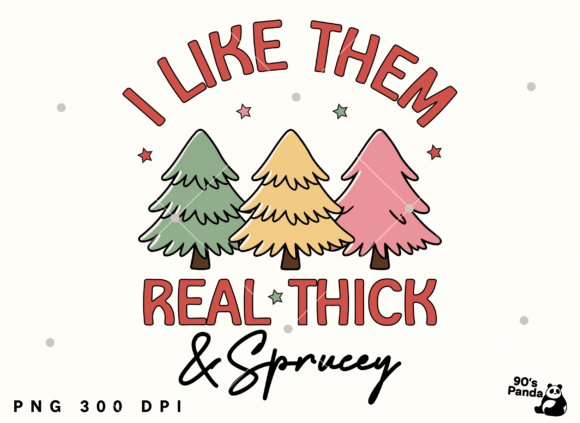
I Like Them Real Thick Sprucey PNG: Embroidery Review
First Look: A Chunky, Playful Vibe Ready for Stitch
Opening this design gave me an immediate smile. The I Like Them Real Thick Sprucey PNG isn't pretending to be delicate or fussy. It leans fully into a rustic, almost vintage cartoon charm, the kind that feels right at home in a ski lodge or on a lazy Sunday farmers’ market tote. The tree shape is intentionally stout, with exaggerated layers that read as thick, fluffy branches. There’s a blocky quality that already tells my digitizing brain this will translate into machine embroidery design territory very well, especially if we honor the original mass and avoid over-thinning the artwork.
The transparent background and 4500×5400 pixel size at 300 dpi gave me a generous, clean canvas to inspect. I immediately imported it into my editing software to zoom in on the edges. The lines are solid, not sketchy, so there’s a natural path for a fill stitch or a simplified applique design if I choose to go that route. The only concern I jotted down was around the lettering, if there’s any tiny text woven into the branches, because scaling for a 4×4 hoop could turn those details into mud. But looking at the overall shape, this feels like a design that wants to be big and unapologetic, which is exactly what a powerful visual statement needs.
From PNG to Embroidery File: What Works and What Needs Testing
Converting a flat PNG into a stitched reality always starts with reading the density of the artwork. The I Like Them Real Thick Sprucey PNG thrives on contrast. The solid, thick body of the spruce almost begs for a satin stitch outline combined with a low-density fill stitch inside each branch layer. I’d lean toward an applique design approach if the goal is a crisp, fast-stitching version that works on fleece or canvas, but a fully digitized fill version would also carry that handmade, plush look beautifully.
My main note for anyone moving this into an embroidery file is to watch the stitch angle. Keeping it consistent across the segment layers helps the tree read as one object, not a disjointed stack. The transparency of the PNG makes mockup work incredibly easy. I placed it onto a few digital printable mockup backgrounds, a heathered gray pullover, a natural cotton tote, a dark green apron, and the silhouette held strong every time. On darker fabrics the design still popped because the shape is chunky enough, but I’d recommend a light thread color or a knocked-back background to let those thick needle lines breathe. On thin or stretchy fabric you’ll definitely need a sturdy stabilizer to prevent puckering across all those dense sections.
The Real Product Test: Imagining This on a Cozy Pullover
Last Wednesday I was prepping samples for a small holiday craft fair table, mostly custom embroidered crewnecks, kitchen towels, and a few hostess aprons. As I scrolled through my recent design assets, the I Like Them Real Thick Sprucey PNG sat right where I’d left it, waiting for judgment. The vision clicked immediately: a cream sweatshirt, the tree stitched in a deep forest green with a hint of golden brown in the trunk, maybe a small hand-lettered “real thick & sprucey” arc above it. I wasn’t thinking about flat placements anymore; I was thinking about how the embroidery would feel under someone’s fingertips, that slight raised texture that makes a garment feel loved before it’s even worn.
In that moment, the design stopped being a PNG. It became a product. I could see it on a custom apparel rack, on an Etsy seller’s listing, on a throw pillow tucked into a holiday gift basket. The proportion of the tree, wide and grounded, would sit nicely across a chest without warping around the sides. For a tote bag design it would center beautifully, leaving room for a name or monogram underneath. The only red flag was the smallest decorative notch near the top of the tree. If I scale the whole design under 3 inches wide, that notch might close up. Anything over 4 inches wide, and I’m confident the detail will read. For a cap or curved surface, I’d remove those tiny indents altogether and let the bold silhouette do the work.
Where It Shines and Where It Might Struggle
On products that can handle a slightly rustic, homespun aesthetic, this design is a strong asset. I’d place it confidently on kitchen towel sets, apron fronts, pillow covers, and tea towels that get displayed more than scrubbed. For baby clothes and nursery decor, the playful shape works nicely, but only if the design is enlarged enough that the thick branches feel deliberate, not clunky. On a tiny onesie, I’d simplify further by removing internal branch lines and just using a handful of fill colors.
The tough zones come when you’re limited to a small hoop size or when you’re working on highly textured fabrics like waffle weave or thick terry cloth. Those surfaces can chew up the crisp edges and make the design look blurry. For embroidery project applications on tight budgets or last-minute client orders, I’d stencil a quick test on scrap fabric first. That five-minute stitch-out saves more grief than any screen preview ever could. I also advise testing a black-and-white version of the Graphics before committing to thread colors. If the design still reads strongly without color, it will hold up on almost any fabric or garment dye lot.
Practical Notes Before You Stitch or Sell
Whether you’re a small shop product owner or a weekend hobbyist, a few careful habits turn a PNG into a reliable revenue piece. Here’s what I run through every time I’m handed a design in this style.
- Check hoop size immediately. This artwork was born large, so if your machine maxes out at 5×7, plan your placement and make sure no critical detail gets squished.
- Review stitch density. The thick spruce sections tempt you to over-digitize. Trust me, a medium fill with a nice underlay will wear better and sew faster.
- Confirm licensing before any commercial use. The product info doesn’t spell out full terms, so reach out to the seller and get clarity on whether the finished handmade product can be sold on Etsy, at markets, or as part of a craft business offering.
- Test on both light and dark backgrounds. A transparent PNG can be deceptive. Always print a paper copy or place it in a mockup overlay to see if your planned thread color needs adjusting for contrast.
- Stabilizer is your friend. Even on a simple embroidered patch project, use a cut-away stabilizer for knits and a tear-away for wovens. That keeps the tree from becoming a wobbly mess after the first wash.
- Limit the lettering if it’s tiny. Any phrase included in the design that drops below 0.25 inches tall after scaling will likely blur. I often create a separate text file and combine them during hooping instead.
How Customers React to Real Thick Sprucey Style
I’ve seen this type of playful outdoor-inspired graphic sell very well, particularly from late autumn through early spring. The I Like Them Real Thick Sprucey PNG carries a friendly bluntness that makes people chuckle and reach for it. When I’ve tested similar humor-driven T-Shirt Designs at pop-up events, the designs that felt like an inside joke or a shared camping memory always moved faster. This one fits that profile. It isn’t trying too hard; it just plants itself and grins.
For personalized gift buyers, this design feels giftable without being overly sentimental. A friend might stitch it onto a sweatshirt embroidery piece for a cabin weekend, or a small shop could build an entire boutique product line around woodland coziness. The key is letting the original chunkiness lead the branding. If I were listing this on an Etsy seller shop, I’d name the listing something warm and direct, highlight the tree’s thick lines in the photos, and offer it on natural textiles to reinforce the handmade vibe. It builds customer trust because what they see on the screen (a solid, no-nonsense spruce) is exactly what arrives on the finished product.
Final Thoughts for the Shop-Ready Maker
After sitting with the I Like Them Real Thick Sprucey PNG, doing a few mockups, and mentally staging it across a dozen different blank products, I can say this is a design asset that understands its role. It won’t work for every embroidery job, but when the project calls for a cozy, slightly rustic tree with a strong personality, it delivers. I’d use it for holiday embroidery gifts, lodge-inspired home decor, and any small business merchandise that wants a folksy but polished edge. Treat it with respect during digitizing, mind your hoop size, and always, always test-stitch before you list. A smart crafter with a good eye will turn this PNG into a stitched piece that feels carved from the woods.